Small lawn
About $50 minimum

OKC Lawn Rx
Weed control for Oklahoma County lawns. On a full plan, three visits a year are weed control and pre-emergent. Stay off the grass until it is dry. We confirm the price after we see the yard.
Weed control and pre-emergent on three of six yearly visits. Share the street address.
Visible weeds, prevention questions, grassy weeds, and broadleaf weeds are not interchangeable. Keep a clear photo or leaf clipping and note whether the growth sits in turf, a bed, gravel, or a concrete seam.
A useful weed-control conversation starts with growth habit, season, and location. You do not need to identify the plant perfectly; a few visual clues can separate very different lawn problems.
The leaves look like grass blades and usually have parallel veins. In fine-textured Bermuda, a grassy weed may stand out as a wider, lighter, faster-growing clump. In fescue, look for a different blade width, growth direction, or seedhead rather than color alone.
These have wider leaves with branching veins. They may form a flat rosette, a creeping patch, or upright stems with flowers, making them easier to distinguish from turf once you look below mowing height.
Nutsedge looks grasslike at first, but its glossy yellow-green leaves tend to stand upright and grow faster than the surrounding lawn. The stem feels triangular rather than round. It often points to a damp area, not simply a missed patch of grass.
Crabgrass often starts as a low, spreading clump with stems that branch outward. Its blades usually look broader and coarser than Bermuda. A photo taken before mowing can show the spreading shape that disappears after a close cut.
Dallisgrass or a similar coarse perennial grassy weed is more likely to look like an upright bunch that returns from the same crown. Coarse blades and taller seed stalks can make it visible above Bermuda or fescue. A clear seedhead photo helps because grassy weeds are easy to confuse from a distant lawn picture.
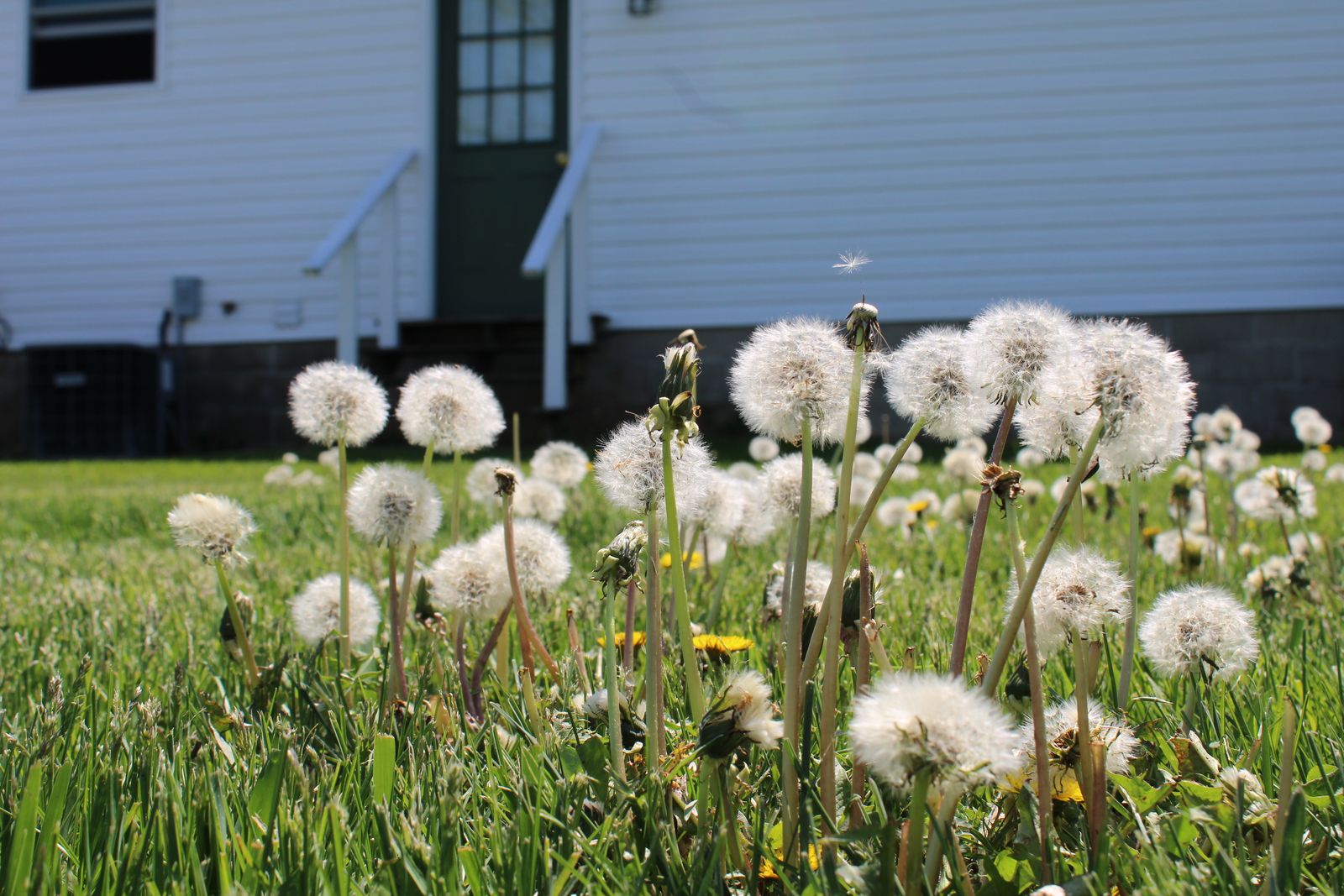
Clover tends to make low patches of three rounded leaflets. Dandelion starts from a low rosette of deeply toothed leaves and may send up a yellow flower on a leafless stalk.
Henbit can bring scalloped leaves and small purple flowers during a cool-season flush. Chickweed is usually lower and mat-forming, with small opposite leaves and tiny white, star-like flowers. Henbit and chickweed may be conspicuous from late winter into spring, then fade as heat arrives; noting when the patch appeared is as useful as the flower color.
Prevention is timed before susceptible weeds emerge. It does not remove every seed, and it is not a cleanup method for a mature plant already standing in the lawn. Once a weed is growing, identification, turf type, growth stage, recent weather, and anything already applied matter.
For eastern Oklahoma County lawns, late winter and early spring often bring cool-season broadleaf questions. Warming soil shifts attention toward warm-season grassy weeds such as crabgrass. Summer heat, thin turf, and wet pockets can reveal coarse grasses and nutsedge. Fall is a useful time to note what kept returning. Rain and temperature move these windows, so they are cues rather than promised calendar dates.
Stay off the grass until it is dry. After fertilizing, water within 24–48 hours if you can, and do not mow until the fertilizer has been watered in.
Yards that are new to spray usually need more than one treatment. Heavy weeds can take a full season. On a full treatment plan, we will come by to spot spray between regular visits if needed — call 405-526-4481.
These are typical local per-visit ranges, not a locked price list. A small lawn is about a $50 minimum. About a half acre is about $135–$150. About one acre is about $225–$250. Harder yards cost more. Easier multi-acre yards can be less per acre. We confirm the final price after we see the property.
About $50 minimum
About $135–$150
About $225–$250
Yes—for maintained residential turf up to about 4 acres. That is larger than many local spray routes are set up to handle. Total deed acreage is not the same as treatable lawn: woods, pasture, ponds, and rough ground usually sit outside the request.
Tell us roughly how much lawn you mow and want treated, plus access notes (gates, soft ground, parked vehicles). We confirm fit from the address and the maintained area—not from acreage alone.
Start with where the weeds are and whether they are already growing. Note front or back, lawn or beds, sun or shade, scattered plants or one heavy patch. Leaf shape, flowers, seedheads, and whether the growth looks grassy are useful descriptions.
Also share grass type if known, bare areas, watering patterns, and anything pulled or applied this year. You do not need to identify the weed on your own. Those details separate prevention talk from active-weed control.
No—we will not guess a product from a web form. A weed that looks obvious in one photo can resemble another plant, and the right approach also depends on the turf, growth stage, weather, and recent applications.
Keep clear photos and note what you already tried. We can confirm the concern and explain the proposed treatment, timing, and expectations before anything is applied.
Both are common, but they are not interchangeable. Broadleaf weeds usually stand apart from the lawn; grassy weeds can blend into Bermuda or fescue until color or seedheads give them away.
Describe what you see instead of forcing a name. Mention whether it returns right after mowing or grows in wet or bare ground. Timing and approach often differ. Keep those notes handy so we can match timing and expectations to this yard instead of guessing from a general lawn tip.
There is not one weed season. Cooler-weather broadleaf weeds can show from late winter into spring after moisture. As soils warm, other weeds emerge, and summer heat opens thin places where grassy weeds take hold.
Fall shows what survived summer. Rainfall and temperature move every window, so treat dates as cues. Share when the weed first appeared and whether it is mature now.
You can pull a few if they are in the way, but leave enough evidence to show what was growing and where. Take a whole-area photo and a close-up first.
Tell us what you pulled and whether roots came out or the plant returned. Avoid adding a new lawn product just to clean up, because recent applications change timing. Keep those notes handy so we can match timing and expectations to this yard instead of guessing from a general lawn tip.
Stay off the grass until it is dry. Tell us about dogs, cats, children, and how the yard is used before service is scheduled.
Secure pets and share gate instructions for the visit if needed. A street address and a phone number are enough to start. Nothing is booked until you agree.
A full treatment plan is 6 visits a year. Three of those visits are weed control and pre-emergent. The other three are fertilizing plus spot weed treatment.
Yards that are new to spray usually need more than one treatment. Heavy weeds can take a full season. On a full treatment plan, call 405-526-4481 if something pops up between regular visits and we can come by to spot spray.
These are typical local per-visit ranges, not a locked price list. A small lawn is about a $50 minimum. About a half acre is about $135–$150. About one acre is about $225–$250.
Harder yards cost more. Easier multi-acre yards can be less per acre. We confirm the final price after we see the property.
Yes. We are licensed and insured. Call or text 405-526-4481. Nothing is booked until you agree.
We serve homeowners across eastern and southeast Oklahoma County. Start with lawn treatment in Oklahoma City, lawn care in Midwest City, or Choctaw lawn treatment if that is the city on the mail. Property details help us confirm whether we can take care of the lawn.
Ready to talk about weeds? Share the street address and a phone number. We’ll follow up — nothing is booked until you agree.
Request lawn help