Small lawn
About $50 minimum

OKC Lawn Rx
Weed control Oklahoma City on this page is the southeast and east side, not a citywide spray list. Call or text 405-526-4481. A full plan is six visits a year. We confirm the price after we see the yard. Nothing is booked until you agree.
Weed control Oklahoma City, southeast and east side. Call 405-526-4481.
Licensed and insuredWeed control and fertilization. Oklahoma requires a commercial applicator license. We do not print a license number on this page.
Six visits a yearThree visits for weed control and pre-emergent, with no fertilizer on those visits. Three visits for fertilizing and spot weed treatment.
Southeast and east sideSame route as Midwest City, Del City, Choctaw, Newalla, Moore east of I-35, and Spencer. Not a citywide Oklahoma City list.
We treat maintained residential lawns on the southeast and eastern side of Oklahoma City. That work sits on the same route as Midwest City, Del City, Choctaw, Newalla, Moore east of I-35, and Spencer. We do not run a citywide Oklahoma City spray list. The city name on the mail is not enough. Share the street address so we can say whether this property is on the route.
The broader hire page is lawn treatment in Oklahoma City. Corridor notes stay on southeast and eastern OKC. The county-wide weed page stays weed control in eastern Oklahoma County.
Oklahoma State University Extension fact sheet HLA-6421, Controlling Weeds in Home Lawns (published March 2017), sorts home-lawn weeds by life cycle. Grassy weeds have long, narrow leaves with parallel veins. Broadleaf weeds have wider leaves with branching veins. You do not need the exact name before you call. Say whether it looks grassy or broadleaf, and when it showed up.
HLA-6421 says summer annuals germinate in the spring and typically die with the first hard frost in the fall. Common summer grassy weeds it names are crabgrass, foxtails, goosegrass, and sandbur. Common summer broadleaf weeds it names are asters, carpetweed, knotweed, puncture vine, common purslane, and spotted spurge.
Winter annuals germinate in late September and October and die the following summer. Common winter grassy weeds in the fact sheet are annual bluegrass, cheat, downy brome, little barley, and rescuegrass. Common winter broadleaf weeds are chickweed, dwarf fleabane, and henbit.
Perennials can come back from underground parts, not only from seed. HLA-6421 lists clovers, curly dock, dandelion, plantains, spring beauty, wild garlic, and woodsorrel as perennial broadleaf weeds. It lists dallisgrass as a perennial grassy weed and yellow nutsedge (nutgrass) as a perennial grass-like weed.
The fact sheet says weeds often start where turf is thin from drought, winter injury, insects, disease, or how the lawn is kept. A spray does not fix those conditions. We do not sell aeration or overseeding. Right now we offer weed control and fertilization.
HLA-6421 says most preemergence herbicides will not control weeds that have already germinated. For crabgrass and foxtails, it says apply preemergence herbicides by March 15 to April 1. For annual bluegrass and chickweed, it says apply by September 15. It also says specific dates are hard to give because conditions change by place and year, and that crabgrass does not normally germinate in the spring before redbud is past full bloom.
The same fact sheet says to water the preemergence herbicide in if 0.5 inch of rain does not fall within 24 to 48 hours, because these products are applied to the soil. It says they generally remain effective for 60 to 110 days, and that a second application may be required for season-long control, depending on the herbicide and the weather. It also says to remove thatch thicker than 0.5 inch, and leaves and cuttings, before the application so the product can reach the soil. We do not sell dethatching.
OSU’s Consumer Bermudagrass Lawn Management Calendar uses a different window for bermudagrass lawns. It places the first crabgrass pre-emergent from January 1 to March 5, and says to follow the label for any second application. For fall or winter, that calendar lists September 1 to October 1. The product it names in that fall window is for winter broadleaf weeds, and the calendar says it is not effective for annual grass control. These are two public OSU documents. They are timing cues, not a date we book for every yard.
Month-by-month notes for eastern Oklahoma County are in what month to spray weeds in Oklahoma. September, when weeds are already up, is a separate question from prevention: should I spray in September.
HLA-6421 says postemergence herbicides are applied after weeds emerge, preferably while they are young and actively growing. It says emerged summer weeds are most effectively controlled in May and June, and emerged winter weeds are most effectively controlled in October and November. Summer annual grassy weeds and summer annual broadleaf weeds are discussed as soon after they emerge in May and June. Winter annual broadleaf weeds are discussed as soon after they emerge in October and November. Perennial broadleaf weeds are discussed when they are young and actively growing. Dallisgrass and yellow nutsedge are discussed for May and June.
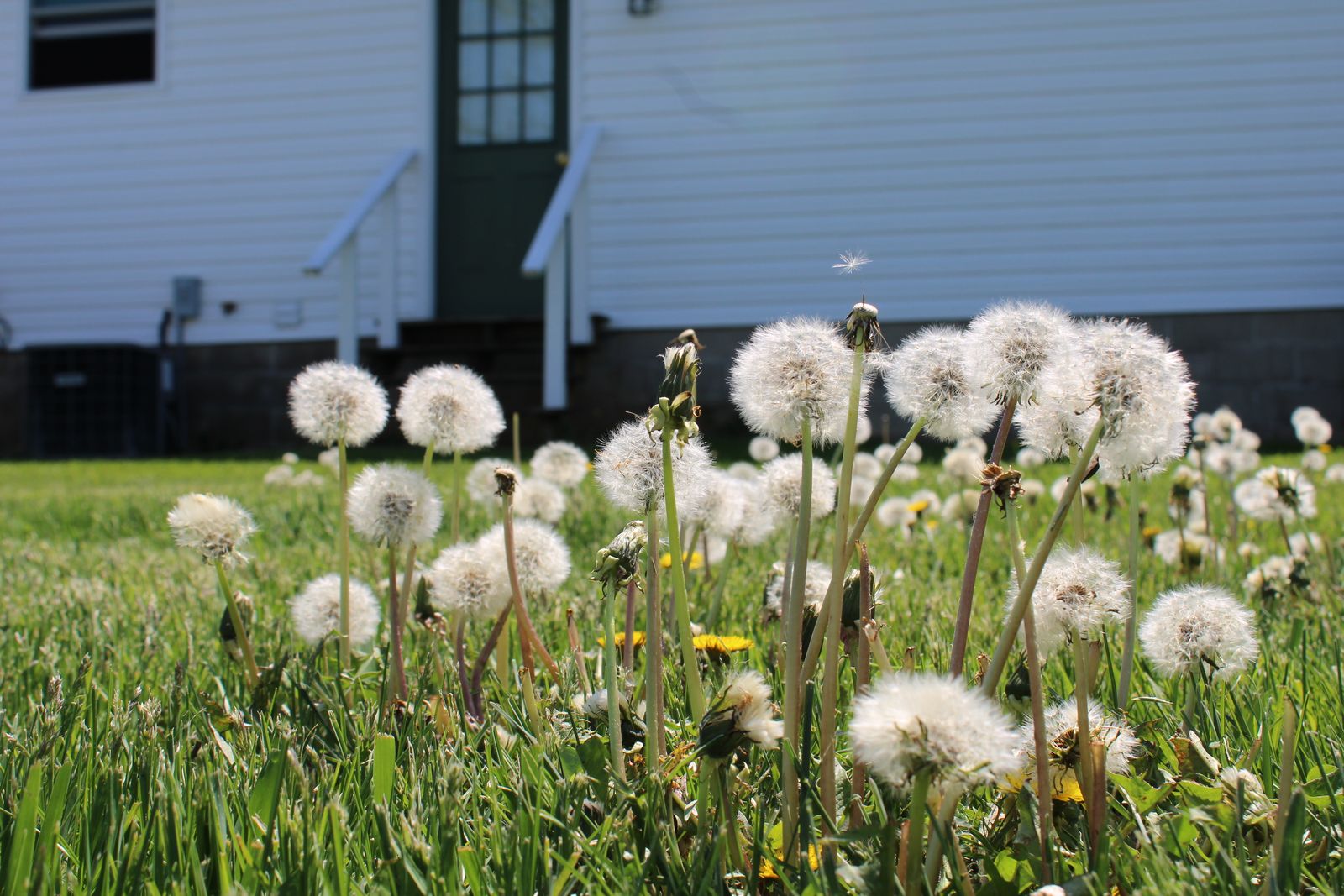
A pre-emergent will not remove a plant that is already standing in the lawn. Flowers or seed heads mean it is growing. That is a cleanup question, not a prevention question.
The fact sheet says a foliar postemergence herbicide needs to stay on the leaf for 24 to 48 hours, and not to mow for several days before or after that kind of application. That is OSU’s note about those products. It is separate from what we tell you after one of our visits, which is below. The fact sheet also names specific herbicides, including older products. We do not copy that product list here, and we will not name a product from this page.
A full treatment plan is 6 visits a year. Three of those visits are weed control and pre-emergent. The other three are fertilizing plus spot weed treatment. The OSU windows above are public timing cues we can talk through. They are not a promise that a visit falls on a particular day. We confirm the plan after we see this lawn.
On a full treatment plan, call 405-526-4481 if something pops up between regular visits and we can come by to spot spray. This is not weekly mowing. Feeding notes stay on the fertilization page.
Stay off the grass until it is dry. After fertilizing, water within 24–48 hours if you can, and do not mow until the fertilizer has been watered in.
These are the same typical local per-visit ranges already published on this site, not a new price and not a locked list. A small lawn is about a $50 minimum. About a half acre is about $135–$150. About one acre is about $225–$250. Harder yards cost more. Easier multi-acre yards can be less per acre. We confirm the final price after we see the property. Nothing is booked until you agree.
About $50 minimum
About $135–$150
About $225–$250
What changes the number is on the lawn treatment cost page.
Title 2, Section 3-82 of the Oklahoma Statutes says it is unlawful for a person to act, operate, do business, or advertise as a commercial applicator without a valid applicator’s license issued by the State Board of Agriculture for the category of pesticide application the person is doing, unless the person is applying pesticide to the person’s own property. A license is limited to the category named on it.
The Oklahoma Department of Agriculture, Food, and Forestry pesticides page describes a commercial applicator as a person who engages in commercial application of pesticides. It defines commercial application as advertising of services, recommendation for use, the preparation for application, and the physical act of applying a pesticide for hire or compensation. The same page says a pesticide applicator license is required to act, operate, do business, or advertise commercially, and that a commercial applicator must provide proof of financial responsibility: not less than $50,000 bodily injury, $100,000 bodily injury per occurrence, and $50,000 property damage, with a different rule for aerial applicators. Those figures are the state’s stated minimums, not a policy we print here.
ODAFF lists category 3a, Ornamental and Turf Outdoor, as the application of pesticides within residential or business areas to lawns, ornamental trees, and shrubs, including park areas, golf courses, and other recreational areas, except work defined under other licensed categories. ODAFF also says a certification card is not itself a license to do pesticide work. A pesticide business license is required for a certified applicator who wants to do commercial pesticide work, or it must be held by the employer.
OKC Lawn Rx states on this site that we are licensed and insured. This page does not print a license number. Call or text 405-526-4481.
Weed timing is from OSU Extension, not from a product label we wrote. The license rule is from Oklahoma law and ODAFF. Visit counts, the route, and the per-visit ranges are what this site already publishes.
Ready to talk about weeds on a southeast or east side lawn? Share the street address. Nothing is booked until you agree.
Check my addressName, phone, full street address, and a short note — grassy or broadleaf if you can tell, where the weeds are thickest, and anything you already applied. Submitting does not schedule an application.
Prefer to talk now? Call or text 405-526-4481. We’ll review whether the property is on the southeast and east side route and what the lawn is doing. Nothing is booked until you agree.
What we need: phone and full street address. A name and a short note about the lawn help. Submitting does not schedule an application.
Form didn’t load? Call us at 405-526-4481.
Or call/text 405-526-4481. Submitting does not book anything.
No. Weed control Oklahoma City on this page is the southeast and east side, on the same route as Midwest City, Del City, Choctaw, Newalla, Moore east of I-35, and Spencer. We do not run a citywide Oklahoma City spray list.
The city name on the mail is not enough. Share the street address so we can say whether this property is on the route. Nothing is booked until you agree.
OSU Extension fact sheet HLA-6421 sorts home-lawn weeds by life cycle. Summer annuals germinate in spring and typically die with the first hard frost. The fact sheet lists crabgrass, foxtails, goosegrass, and sandbur as common summer grassy weeds, and asters, carpetweed, knotweed, puncture vine, common purslane, and spotted spurge as common summer broadleaf weeds.
Winter annuals germinate in late September and October and die the following summer. The fact sheet lists annual bluegrass, cheat, downy brome, little barley, and rescuegrass as common winter grassy weeds, and chickweed, dwarf fleabane, and henbit as common winter broadleaf weeds. Perennials it lists include clovers, curly dock, dandelion, plantains, dallisgrass, and yellow nutsedge. We confirm what is actually in this yard after we see it.
HLA-6421 says to apply preemergence herbicides by March 15 to April 1 for crabgrass and foxtails, and by September 15 for annual bluegrass and chickweed. It says crabgrass does not normally germinate before redbud is past full bloom, and to water the product in if 0.5 inch of rain does not fall within 24 to 48 hours. Preemergence herbicides generally remain effective 60 to 110 days.
OSU’s Consumer Bermudagrass Lawn Management Calendar uses a different window: the first crabgrass pre-emergent from January 1 to March 5, and a September 1 to October 1 window aimed at winter broadleaf weeds, not annual grasses. Those are public timing cues. We confirm the visit after we see the lawn. We will not name a product from this page.
HLA-6421 says postemergence herbicides go on after weeds emerge, preferably while they are young and actively growing. It says emerged summer weeds are most effectively controlled in May and June, and emerged winter weeds in October and November.
A pre-emergent will not remove a plant that is already standing in the lawn. We will not name a product from this page.
A full treatment plan is 6 visits a year. Three visits are weed control and pre-emergent. Fertilizer is not on those visits. Three visits are fertilizing plus spot weed treatment.
Yards that are new to spray usually need more than one treatment. Heavy weeds can take a full season. On a full treatment plan, call 405-526-4481 if something pops up between regular visits and we can come by to spot spray.
These are typical local per-visit ranges, not a locked price list. A small lawn is about a $50 minimum. About a half acre is about $135–$150. About one acre is about $225–$250. Harder yards cost more. Easier multi-acre yards can be less per acre.
We confirm the final price after we see the property. Nothing is booked until you agree.
Yes. Title 2, Section 3-82 of the Oklahoma Statutes makes it unlawful to act, operate, do business, or advertise as a commercial applicator without a valid applicator’s license from the State Board of Agriculture for the category of pesticide application, unless the person is treating the person’s own property. ODAFF lists category 3a, Ornamental and Turf Outdoor, for applying pesticides to lawns in residential areas.
OKC Lawn Rx states on this site that we are licensed and insured. This page does not print a license number.
Stay off the grass until it is dry. After fertilizing, water within 24–48 hours if you can, and do not mow until the fertilizer has been watered in.
On a full treatment plan, call 405-526-4481 if something pops up between regular visits and we can come by to spot spray.
Yes, for maintained residential turf up to about 4 acres. Total deed acreage is not the same as treatable lawn. Woods, pasture, ponds, and rough ground usually sit outside the request.
Tell us roughly how much lawn you mow and want treated, plus access notes such as gates, soft ground, or parked vehicles. We confirm fit from the address and the maintained area.
Oklahoma City weed control on this page is the southeast and eastern side. Compare it with southeast and eastern OKC lawn treatment, lawn care in Midwest City, or Choctaw lawn treatment. Then call or text 405-526-4481 or share the address.