

OKC Lawn Rx
What is the best time to put grub control on your lawn?
Early to mid summer, while grubs are still small — and only if the lawn actually has them. We do not sell grub control.
Early summer, if small grubs are actually there.
The short answer
In central Oklahoma the useful window is usually early to mid summer, while young grubs are still small, and only when the lawn actually has them. Brown patches that lift like a rug often show up later, in late summer. By then the grubs are larger and harder to deal with. A neighbor’s calendar is not a diagnosis.
We do not sell grub control, mosquito work, or a separate insect program. Weed control and fertilization will not replace a grub treatment, and a grub product will not fix a sprinkler miss, heat stress, or a weed you can already see. Right now our work on maintained lawns in Spencer, Midwest City, Choctaw, Del City, Newalla, and southeast Oklahoma City is weed control and fertilization only — not aeration, overseeding, mowing, trees, mosquito, or grub programs.
What to check before you treat
- Small grubs, early summerThat is the window people mean by prevention. It is not a reason to treat a healthy lawn.
- Damage shows up laterLate-summer brown spots, birds digging, and turf that rolls back are clues to look at the roots. Larger grubs are a harder job.
- Not every brown patchHeat, dry soil, and a missed sprinkler make the same color from the street.
Signs versus a guess
Lift a small flap of the brown turf and look at the roots and the top of the soil. White, C-shaped grubs are the clue people are hunting. A few grubs under a healthy lawn are not the same as turf that has lost its roots. Birds digging are a hint, not proof. Photograph the damage and a grub if you find one. Do not treat the whole yard because the house next door did.
We will not name a product from this page. If you already put a grub product down, say what and about when. We do not sell a grub pass.
What OSU Extension says to check
Someone looking up grub control in Oklahoma City still has to count the larvae in the soil. Oklahoma State University Extension’s turfgrass page groups masked chafers and Japanese beetles as annual white grubs, and those annual grubs have a one-year life cycle. Damage from them is most common from late August through September and October. The grass browns in spots or in irregular areas. In a heavy infestation the roots can be eaten away until the turf rolls back like a carpet. White grubs are rarely a problem in bermudagrass. They typically damage cool-season grasses such as bluegrass and fescue.
Dig in a brown area near the edge of green turf. If the soil is dry, you may need to dig 6 to 10 inches to find the larvae. That page says to treat when you find five or more May or June beetle larvae per square foot. Eight to ten annual white grubs per square foot can be tolerated. Those annual grubs are smaller than multi-year May or June beetle grubs, and they are more likely to feed on dead organic matter once they are fully grown. A preventative treatment is not recommended unless the area has a history of white grub infestations and is clearly marked off.
A second OSU page, the fact sheet Ornamental and Lawn Pest Control (For Homeowners), does not use the same numbers. Monitor by cutting back several 1-square-foot sections of lawn and counting the grubs. Treat at 15 to 20 masked chafer grubs per square foot, or at 4 to 5 May or June beetle grubs per square foot. Vertebrate predators that dig for the grubs cause secondary damage. The masked-chafer counts differ. The turfgrass page says eight to ten annual white grubs per square foot can be tolerated, and masked chafers are one of those annual white grubs. The fact sheet says to treat at 15 to 20 masked chafer grubs per square foot. The May or June beetle counts differ too: five or more larvae on the turfgrass page, and 4 to 5 grubs on the fact sheet.
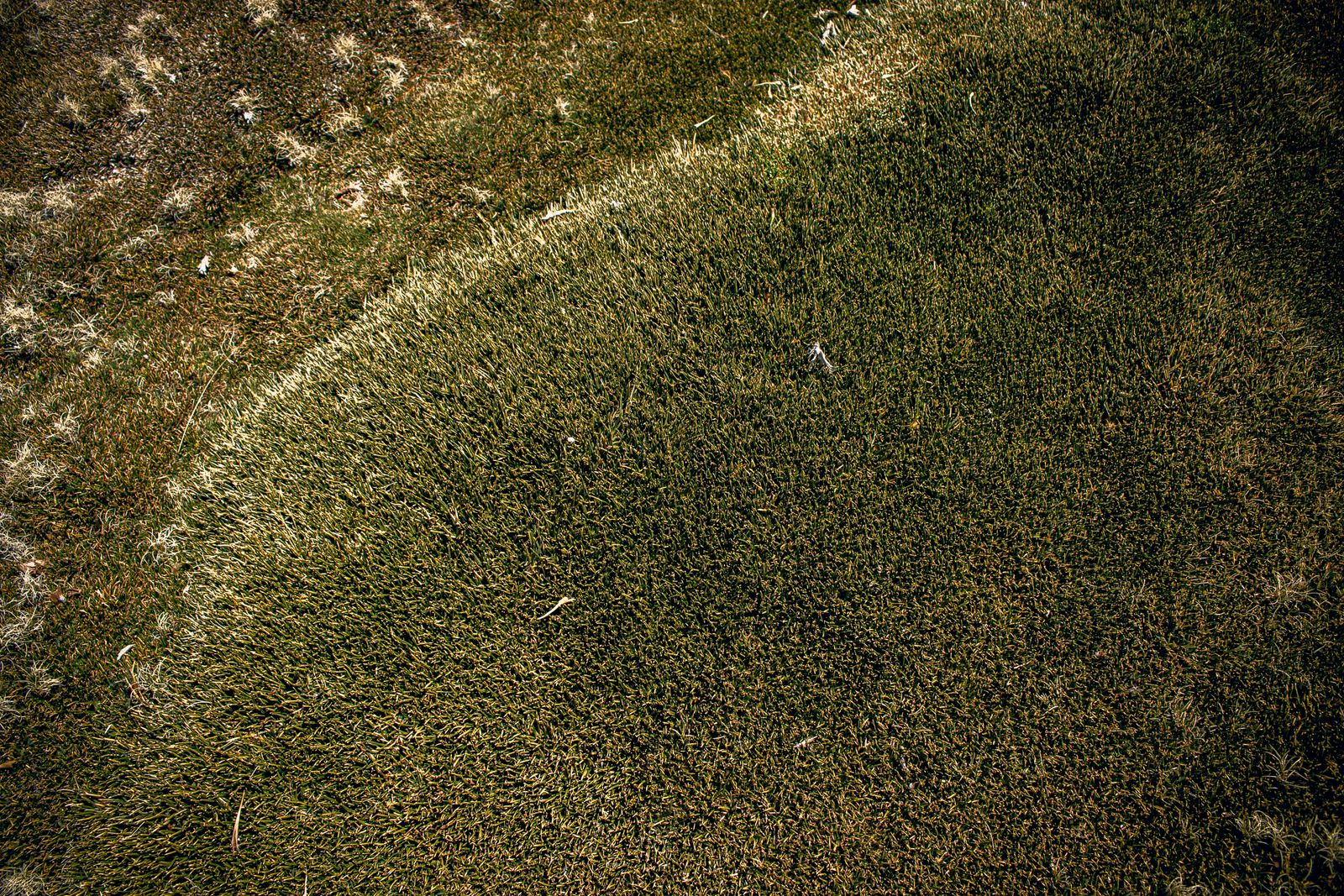
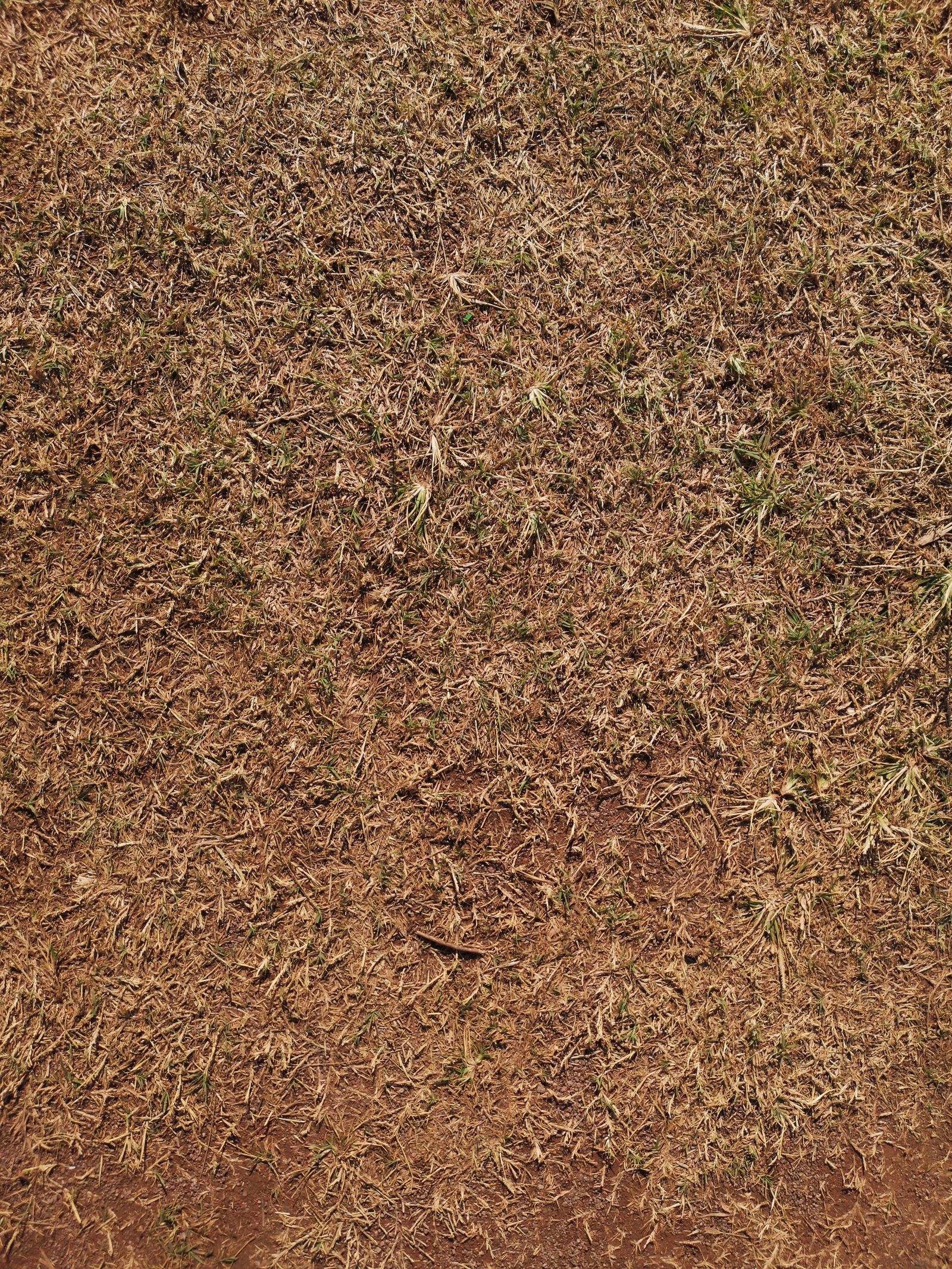
What brown turf can mean
These photos are lawn conditions, not a grub diagnosis. A wide shot and a close-up of the roots tell more than a product name.
What we can actually do
If the lawn is weedy, thin from heat, or pale, that may still be a weed or feeding question — not a grub program. How those visits play on eastern Oklahoma County lots is part of Choctaw lawn treatment. Many Midwest City yards mix open sun and house shade on one address; that split is part of lawn care in Midwest City. If feeding is the question, see lawn fertilization Midwest City.
OKC Lawn Rx also offers lawn treatment in Oklahoma City.
Typical local per-visit ranges for that weed and feed work — not a grub price — are on the lawn treatment cost guide. If you were hoping we spray for grubs, say so on the call so we do not waste your time.
We are licensed and insured for the work we do sell. We confirm the price after we see the yard. Nothing is booked until you agree. Share the street address and a phone number if the lawn needs weed control or fertilization.
Where these facts come from
Every count, sign, and timing note in What OSU Extension says to check is from the two Oklahoma State University Extension pages below. Both were read on November 3, 2026. They do not state the same masked-chafer number. The new section does not name a product. Earlier sections on this page are this site’s own wording.
- OSU Extension, Turfgrass Science — White Grubs — read November 3, 2026. One-year life cycle for annual white grubs (masked chafers and Japanese beetles); damage most common in late August through September and October; browning in spots or irregular areas; heavy infestations can let turf roll back like a carpet; dig near the edge of green turf, and 6 to 10 inches deep in dry soil; treat at five or more May or June beetle larvae per square foot; eight to ten annual white grubs per square foot can be tolerated; preventative treatment is not recommended unless the area has a history of white grub infestations and is clearly demarcated; rarely a problem in bermudagrass, and typically a problem in cool-season grasses such as bluegrass and fescue.
- OSU Extension fact sheet, Ornamental and Lawn Pest Control (For Homeowners) — read November 3, 2026. Monitor by cutting back several 1-square-foot sections and counting grubs; treat at 15 to 20 masked chafer grubs per square foot or 4 to 5 May or June beetle grubs per square foot; vertebrate predators digging for grubs cause secondary damage.