

OKC Lawn Rx
Is it too late to overseed my lawn in Oklahoma?
It can be. Fescue has a short fall window. Bermuda does not follow that seed calendar. We do not sell overseeding.
It depends on the grass and how late the season is.
The short answer
It can be too late, and it can still be early enough. Fescue in central Oklahoma is usually seeded from about mid-September into October, while the soil is warm and the air is cooling, and only if you can water the new seed. Peak summer heat is a hard window. Young grass dries out. Once nights are freezing hard and the soil has cooled, new fescue seed is often a weak bet until the next cool season.
Bermuda does not use that fall seed calendar. It is a warm-season grass. People usually establish it while it is growing in warm weather, not with a fall overseed the way they do fescue. A yard with both grasses will not take one Saturday of seed. We do not sell overseeding.
How to read the season
- Summer heatUsually a poor time to start seed. Young grass dries out. Wait for cooler growth.
- Early fall, if you can waterFescue may still be in the window. Bermuda is usually not a fall seed job.
- Hard freezesFescue seed is often too late until the next cool season.
What OSU Extension says about the calendar
Oklahoma State University Extension dates this, and the dates are now behind us. The notes here are for a homeowner checking the calendar. We do not sell overseeding. We do not put seed down, and we do not sell seed.
On October 5, 2025, OSU Extension’s column “A Greener Spring Lawn Means Overseeding This Fall” says: “The month of October is the best time to establish a cool-season lawn or overseed tired cool-season lawns.” Just above that line, the column names “Turf type tall fescue and Kentucky Bluegrass” as the cool-season grasses. October is over, so the fescue window OSU calls the best time has passed.
The same column speaks to warm-season lawns in the next instruction: “When overseeding bermudagrass, zoysiagrass or buffalograss lawns, wait until growth is slowed by cool weather. But, don’t wait too long because too-cold conditions will hinder or even prevent germination and growth.” Slowed growth is the start. Cold that stops the seed is the stop.
HLA-6420, “Lawn Management in Oklahoma,” published June 2017, covers winter overseeding of bermudagrass with perennial ryegrass. It says perennial ryegrass can be planted into warm-season turfgrasses in late September and October to produce a green turf cover from October through April. It then sets a late date: “if perennial ryegrass is planted too late, after November 1, cold conditions will hinder or possibly prevent its germination and growth.” As of November 4, 2026, it is past November 1, so a winter ryegrass overseed is late by that fact sheet.
HLA-6420 also states the rate and the first waterings. Those steps belong to the person doing the seed work. “The recommended overseeding rate for winter color in home lawns and other similar turfgrass areas is 10 to 20 pounds of seed per 1000 ft.².” “During the first seven to ten days after seeding, the upper soil surface (1 inch) should be kept moist. This will require light waterings, sometimes 3-4 times per day.” It says: “Do not apply preemergence herbicides after July 1 in areas to be overseeded.” In spring it says: “However, do not fertilize after March 1 to allow the perennial ryegrass to “go out” and the warm-season turf to “come in” in the spring.”
We do not sell overseeding. If the grass that is already growing needs weeds treated or a feed, that is the work OKC Lawn Rx does.
What seed will not fix
Seed needs light, contact with soil, and steady water. It will not fill dense shade, a compacted path that sheds water, or a spot you cannot water. Clay in eastern Oklahoma County can seal after rain and then bake. Seed on that crust is how a bag gets wasted.
Choctaw yards often have a sunny front and more maintained lawn than a compact city lot. The seed question is still the turf you mow, not pasture or woods. Town notes are on Choctaw lawn treatment.
What to look at before you seed
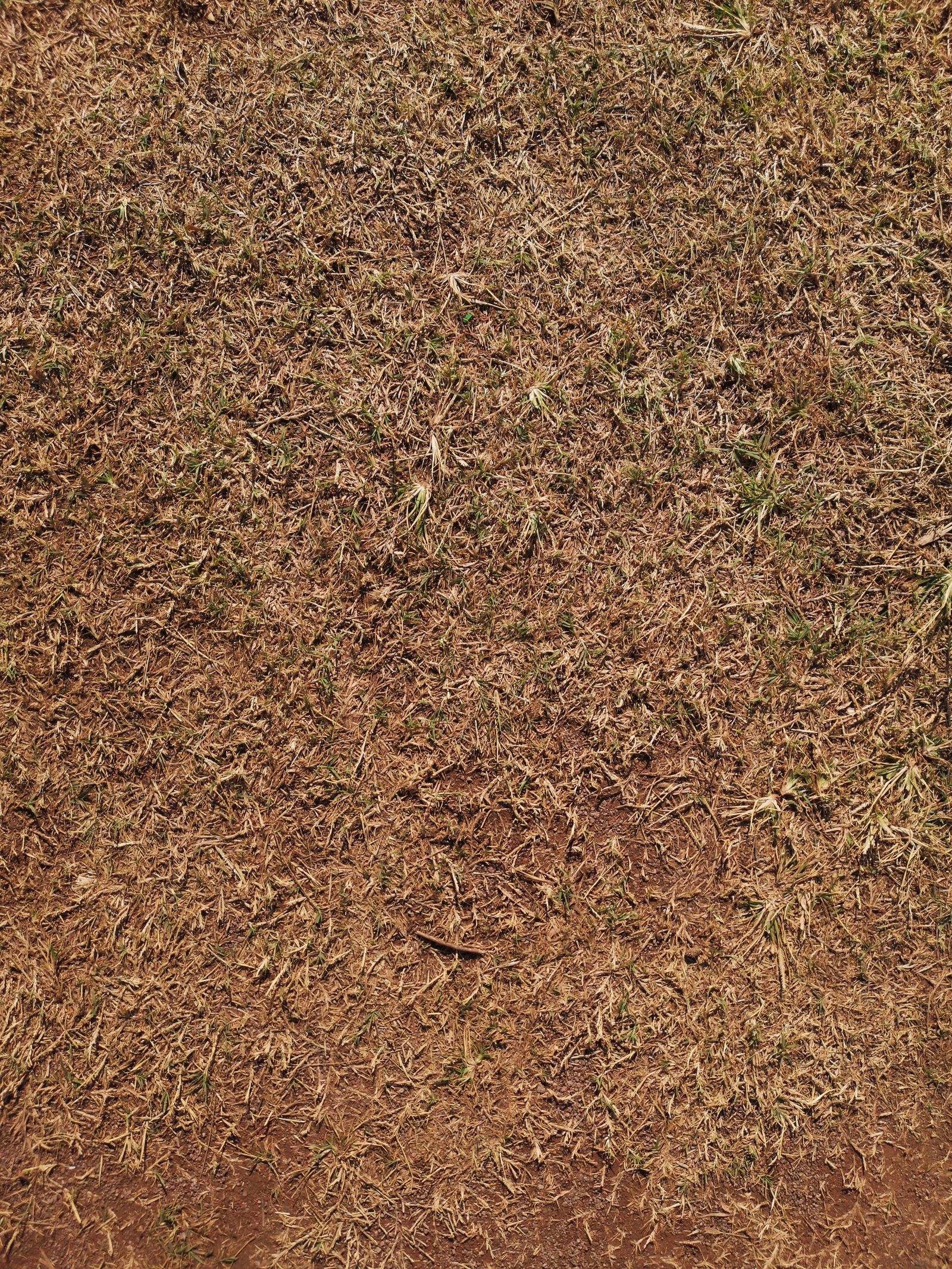
A wide shot and a close-up of the thin spot matter more than the bag. Note sun, shade, and whether you can water.

We do not sell overseeding
Right now OKC Lawn Rx offers weed control and fertilization only — not aeration, overseeding, mowing, trees, mosquito, or grub programs. Many Midwest City yards mix open sun and house shade on one address, so “too late to seed” is not one calendar. That split is part of lawn care in Midwest City. A feed on living grass in that city is lawn fertilization Midwest City.
OKC Lawn Rx also offers lawn treatment in Oklahoma City.
Fertilizer will not invent grass on bare clay. Typical local per-visit ranges for the weed and feed work we do sell — not a seed price — are on the lawn treatment cost guide.
Tell us the grass type if you know it, whether you can water, and what month you are in. If the real job is weeds or a feed on living grass, we can talk about that. We are licensed and insured. We confirm the price after we see the yard. Nothing is booked until you agree. Share the street address and a phone number to start.
Where these facts come from
The calendar dates, the seed rate, and the watering notes added above come from the two Oklahoma State University Extension pages in this list. Both were read on November 4, 2026. The sections that were already on this guide stay this site’s own wording. We do not sell overseeding.
- OSU Extension column, “A Greener Spring Lawn Means Overseeding This Fall” (October 5, 2025) — read November 4, 2026. October is the best month to establish a cool-season lawn or overseed tired cool-season lawns. The column names turf type tall fescue and Kentucky Bluegrass as the cool-season grasses. For bermudagrass, zoysiagrass, or buffalograss, wait until growth is slowed by cool weather, and do not wait so long that cold hinders or prevents germination.
- OSU Extension HLA-6420, Lawn Management in Oklahoma (published June 2017) — read November 4, 2026. Perennial ryegrass into warm-season turf in late September and October; after November 1, cold can hinder or prevent germination and growth; 10 to 20 pounds of seed per 1000 ft.² for winter color in home lawns; keep the upper inch of soil moist for the first seven to ten days, sometimes with three or four light waterings a day; no preemergence herbicides after July 1 in areas to be overseeded; do not fertilize after March 1 so the perennial ryegrass can go out and the warm-season turf can come in.